TL;DR: The transition from traditional hose manufacturing techniques to modern automated systems is no longer just an option; it is an industrial necessity. Upgrading to advanced winding technology ensures unparalleled precision, drastic reductions in material waste, enhanced worker safety, and a significant boost in production speed. This comprehensive guide explores the mechanical superiority, financial benefits, and operational advantages of adopting state-of-the-art spiral winding technology for high-pressure hydraulic hose production.
In the highly competitive landscape of industrial manufacturing, the demand for high-pressure hydraulic hoses has never been greater. These critical components serve as the lifelines for heavy machinery in construction, mining, aerospace, agriculture, and automotive industries. As the operational pressures of these machines continue to rise, the structural integrity of the hydraulic hoses must evolve accordingly. Historically, manufacturers relied on traditional braiding and manual or semi-automated winding methods to reinforce these hoses. However, as industry standards such as SAE and DIN EN require increasingly higher burst pressures and tighter tolerances, traditional methods are rapidly becoming obsolete.
The solution to meeting these modern engineering challenges lies in advanced manufacturing technology. By transitioning to a highly automated, precision-engineered system, manufacturers can eliminate the inconsistencies inherent in older methods. The shift towards specialized spiral winding equipment represents a monumental leap forward in production capabilities, offering a perfect synergy of speed, accuracy, and cost-efficiency.
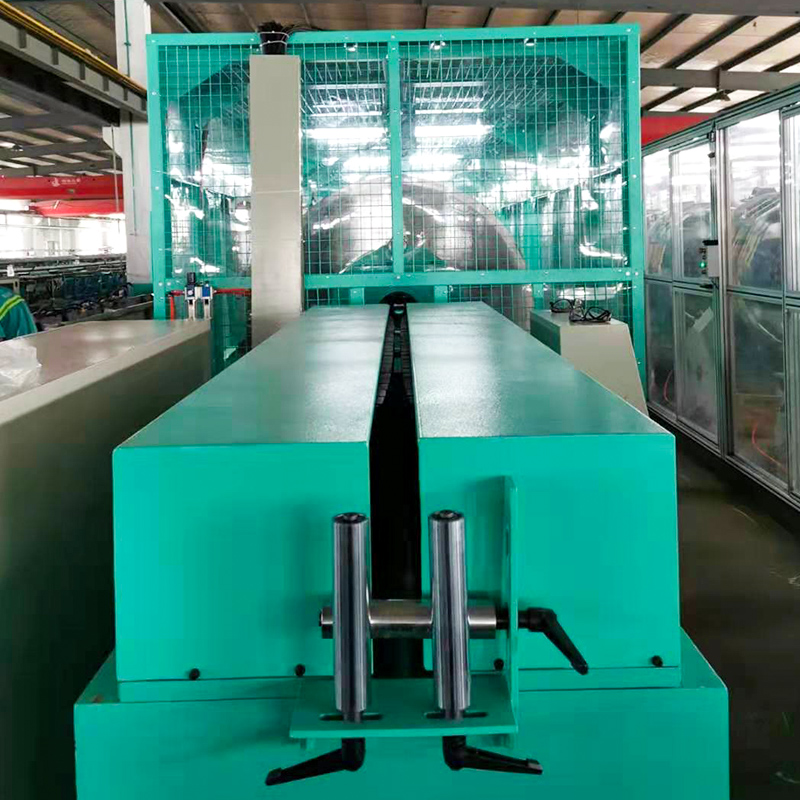
Modern high-speed equipment for hydraulic hose reinforcement.
What Exactly is a Hose Wire Spiral Winding Machine?
To truly understand the paradigm shift in hydraulic hose manufacturing, we must first define the core technology driving it. A Hose Wire Spiral Winding Machine is a highly specialized piece of industrial equipment designed to wrap high-tensile steel wire around a rubber hose inner tube in a continuous, precise spiral pattern. Unlike braiding, which interweaves wires in a crisscross pattern, spiral winding lays the wires parallel to each other in alternating layers (typically four to six layers) separated by thin layers of rubber insulation.
This specific structural design is critical for producing hoses capable of withstanding extreme impulse pressures, often exceeding 6,000 PSI (41 MPa). The machine operates by feeding the inner rubber core through a central axis while multiple rotating bobbins dispense the high-tensile steel wire at a mathematically calculated pitch and tension. The result is a rigid, highly durable hose that resists expansion and contraction under severe hydraulic load, making it the industry standard for heavy-duty applications.
The Engineering and Mechanics of a Hose Wire Spiral Winding Machine
The mechanical brilliance of the Hose Wire Spiral Winding Machine lies in its intricate synchronization of multiple moving parts. At its core, the machine consists of a payoff stand, a caterpillar haul-off unit, multiple winding decks (or spindles), a taping machine, and a take-up stand. The inner hose tube is pulled through the machine at a constant, highly regulated speed.
As the hose passes through the winding decks, carriers holding spools of steel wire rotate around the hose. The speed of the haul-off unit and the rotational speed of the winding decks are perfectly synchronized by an advanced Programmable Logic Controller (PLC) system. This synchronization determines the "pitch"—the distance between each wrap of the wire. Maintaining an exact pitch is paramount; if the pitch is too tight, the hose becomes inflexible and prone to snapping. If the pitch is too loose, the hose will fail under high pressure.
Furthermore, the Hose Wire Spiral Winding Machine utilizes sophisticated tension control systems. Each individual wire must be applied with the exact same amount of tension. If even one wire is looser than the others, it will not bear its share of the hydraulic load, causing the tighter wires to overcompensate and eventually rupture. Modern machines use pneumatic or electromagnetic tensioning devices that monitor and adjust the tension of each wire in real-time, ensuring a flawless production run.
Traditional Winding Methods vs. The Modern Hose Wire Spiral Winding Machine
To appreciate the value of modern equipment, it is essential to compare it directly with the traditional methods it replaces. For decades, manufacturers relied on mechanical braiding machines or older, mechanically linked winding machines. These legacy systems, while functional for lower-pressure applications, present significant limitations when tasked with producing modern ultra-high-pressure hoses.
Traditional methods relied heavily on mechanical gearboxes to set the pitch and tension. Changing the production specifications required operators to manually swap out gears, a time-consuming process that resulted in hours of machine downtime. Additionally, mechanical wear and tear on these gears led to microscopic inconsistencies in the wire pitch, which could compromise the integrity of the entire batch of hoses.
In stark contrast, the modern Hose Wire Spiral Winding Machine is entirely electronically controlled. Pitch, tension, and speed are adjusted via a digital touchscreen interface. What used to take hours of mechanical adjustment can now be accomplished in seconds with the push of a button. This digital precision eliminates the human error and mechanical slop associated with traditional methods.
Production Speed: Why the Hose Wire Spiral Winding Machine Wins
One of the most glaring differences between traditional methods and the modern Hose Wire Spiral Winding Machine is the sheer speed of production. Traditional braiding machines are inherently slow because the bobbins must weave in and out of each other, tracing a complex figure-eight path. Older mechanical winding machines were faster than braiders but were still limited by the physical constraints of their mechanical linkages and the inability to monitor tension at high speeds without causing wire breakage.
The contemporary Hose Wire Spiral Winding Machine operates at exponentially higher revolutions per minute (RPM). Because the wires are laid parallel rather than interwoven, the bobbins simply rotate in a continuous circle around the hose. Advanced servo motors and frictionless bearings allow these winding decks to spin at incredible speeds. Furthermore, because the PLC system monitors tension in real-time, the machine can run at maximum speed without the risk of wire snapping. This translates to thousands of additional meters of hose produced per shift, drastically increasing a facility's overall output and revenue potential.
Accuracy and Tension Control in the Hose Wire Spiral Winding Machine
Speed is irrelevant if the final product fails quality control. In the realm of high-pressure hydraulics, accuracy is a matter of safety. A blown hydraulic hose on a construction excavator can cause catastrophic equipment failure, environmental damage from oil spills, and severe injury or death to operators. Traditional methods struggled to maintain uniform tension across all wires, especially as the bobbins emptied and the physical weight of the wire spools changed.
The modern Hose Wire Spiral Winding Machine solves this through dynamic tension compensation. As the wire is depleted from the bobbin, the machine's sensors detect the change in mass and automatically adjust the braking force applied to the spool. This ensures that the tension applied to the wire on the very first meter of the hose is identical to the tension applied on the ten-thousandth meter. This level of microscopic accuracy guarantees that every hose produced meets strict international safety certifications, reducing liability and enhancing the manufacturer's brand reputation.
Financial Benefits of Investing in a Hose Wire Spiral Winding Machine
While the initial capital expenditure for a state-of-the-art Hose Wire Spiral Winding Machine is substantial, the long-term financial benefits make it one of the most lucrative investments a manufacturing facility can make. The return on investment (ROI) is realized through multiple compounding factors: increased output, reduced labor costs, minimized material waste, and the ability to command premium prices for superior quality products.
When a manufacturer utilizes traditional methods, they are often restricted to producing lower-tier hoses (e.g., 1-wire or 2-wire braided hoses) which have lower profit margins due to high market saturation. By integrating a Hose Wire Spiral Winding Machine, the manufacturer gains the capability to produce highly specialized 4-wire and 6-wire spiral hoses (such as SAE 100R12, R13, and R15). These premium hoses are in high demand in heavy industries and carry significantly higher profit margins, rapidly accelerating the ROI of the machine.
Labor Cost Reduction with a Hose Wire Spiral Winding Machine
Labor is consistently one of the highest operational expenses in any manufacturing plant. Traditional winding and braiding machines required constant human supervision. Operators had to manually monitor wire tension, watch for wire breaks, and manually measure the pitch with calipers to ensure the mechanical gears were functioning correctly. A single operator could typically only manage one or two legacy machines at a time.
The automation provided by a modern Hose Wire Spiral Winding Machine drastically alters this ratio. Because the machine is equipped with automated fault detection, wire-break sensors, and digital pitch control, it requires minimal human intervention once a production run is initiated. If a wire breaks or a spool runs empty, the machine automatically halts and alerts the operator via a visual or auditory alarm. This level of autonomy allows a single skilled operator to oversee an entire bank of winding machines simultaneously, significantly reducing the labor cost per meter of hose produced.
Material Waste Minimization Using a Hose Wire Spiral Winding Machine
In the production of hydraulic hoses, raw materials—specifically high-tensile steel wire and synthetic rubber—account for a massive portion of the cost of goods sold (COGS). Traditional methods were notorious for generating high levels of scrap. Inconsistent tension would lead to "bird-caging" (where wires bunch up and separate from the rubber), and incorrect pitch settings would result in hundreds of meters of unusable hose before the error was detected.
A Hose Wire Spiral Winding Machine virtually eliminates this material waste. The advanced PLC systems run diagnostic checks before production begins, ensuring all parameters are perfectly aligned. During production, laser micrometers and optical sensors continuously scan the hose. If the machine detects a deviation of even a fraction of a millimeter, it immediately stops the process before large quantities of raw material are wasted. Furthermore, the precise tensioning ensures that wire is not over-stretched or under-utilized, optimizing the yield from every single spool of steel wire.
Key Industry Applications for the Hose Wire Spiral Winding Machine
The hoses produced by a Hose Wire Spiral Winding Machine are not standard garden hoses; they are industrial lifelines. Understanding the applications of these hoses highlights why the precision of the winding machine is so critical.
Mining and Excavation: In underground mining, hydraulic equipment operates in incredibly harsh environments. The hoses must withstand not only immense internal fluid pressure but also external abrasion from rocks and debris. The 4-wire and 6-wire spiral hoses produced by these machines provide the necessary crush resistance and burst strength required for tunnel borers and hydraulic roof supports.
Construction Machinery: Excavators, bulldozers, and cranes rely on high-pressure hydraulics to lift massive loads. The impulse pressure—sudden spikes in hydraulic force when a load is lifted or dropped—can easily rupture a braided hose. Spiral wound hoses are specifically designed to absorb these extreme impulse cycles without failing.
Oil and Gas Exploration: Offshore drilling rigs utilize blowout preventers (BOPs) and hydraulic top drives that operate under extreme pressure and volatile conditions. The hoses connecting these systems must be flawless. The Hose Wire Spiral Winding Machine ensures the structural integrity required to prevent catastrophic blowouts in the energy sector.
Aerospace and Aviation: Hydraulic systems in aircraft control landing gear, flaps, and steering. The hoses must be lightweight yet incredibly strong, capable of operating in extreme temperature fluctuations. The precision tensioning of modern winding machines allows for the use of ultra-fine, high-strength aerospace-grade wire to meet these exacting standards.
How to Select the Right Hose Wire Spiral Winding Machine for Your Business
Transitioning to advanced winding technology requires careful consideration of your facility's specific production goals. Not all machines are created equal, and selecting the right model depends on several technical factors.
First, consider the maximum hose diameter you intend to produce. Machines are rated by the inner diameter (ID) and outer diameter (OD) of the hoses they can accommodate. If your primary market is heavy mining equipment, you will need a machine capable of handling large-bore hoses (up to 2 inches or more). Second, evaluate the number of winding decks. A standard high-pressure hose requires four layers of spiral wire, meaning a machine with two winding decks (each applying two layers in opposite directions) is necessary. For ultra-high-pressure applications (like SAE 100R15), a machine capable of applying six layers of wire is required.
Additionally, review the machine's control systems. Ensure the PLC interface is user-friendly, supports multiple languages, and allows for the storage of "recipes" (pre-set production parameters for different hose types). This feature alone will save countless hours during changeovers.
Choosing the Best Supplier for Your Hose Wire Spiral Winding Machine
The machinery is only as good as the company standing behind it. Purchasing heavy industrial equipment is a long-term partnership. It is absolutely vital to source your equipment from a dedicated, experienced hydraulic hose production equipment supplier. A reputable supplier does more than just deliver the machine; they provide comprehensive turnkey solutions.
When evaluating a supplier, look for their ability to offer on-site installation and rigorous operator training. The transition from traditional to automated systems requires a shift in operator mindset, and professional training ensures your team can maximize the machine's potential from day one. Furthermore, inquire about their after-sales support, warranty terms, and the availability of spare parts. A machine sitting idle due to a lack of replacement parts costs your business money every minute. A reliable supplier will have a robust global logistics network to ensure minimal downtime.
Frequently Asked Questions About the Hose Wire Spiral Winding Machine
Q1: What is the main difference between a braiding machine and a Hose Wire Spiral Winding Machine?
A braiding machine weaves wires over and under each other in a crisscross pattern, which creates friction points between the wires under high pressure. A Hose Wire Spiral Winding Machine lays the wires flat and parallel to each other in alternating layers. This eliminates wire friction and allows the hose to withstand significantly higher burst pressures and impulse cycles.
Q2: Can a Hose Wire Spiral Winding Machine process different types of wire?
Yes. Modern machines are highly versatile and can handle various diameters and tensile strengths of steel wire, as well as synthetic fibers like Kevlar or aramid, depending on the specific tensioning systems installed. The PLC allows operators to adjust the tension profiles to match the exact specifications of the material being used.
Q3: How difficult is it to train operators on a new Hose Wire Spiral Winding Machine?
While the underlying technology is complex, the user interface is designed to be intuitive. Because the machine is CNC/PLC controlled, operators interact primarily with a touchscreen interface rather than manually adjusting mechanical gears. With proper training from the equipment supplier, operators familiar with basic hose manufacturing can typically master the new system within a few weeks.
Q4: How does the machine handle wire breaks during production?
Advanced machines are equipped with highly sensitive electronic wire-break detectors on every single bobbin carrier. If a wire snaps or a bobbin runs out, the sensor instantly sends a signal to the PLC, which triggers the high-speed braking system to halt the machine in a fraction of a second. This prevents the production of defective hose segments and allows the operator to weld the wire and resume production quickly.
Q5: What maintenance is required for a Hose Wire Spiral Winding Machine?
Routine maintenance includes lubricating the high-speed bearings, inspecting the pneumatic or electromagnetic tensioning brakes for wear, cleaning the optical sensors, and ensuring the haul-off caterpillar tracks have adequate grip. Because modern machines have fewer mechanical linkages and gearboxes than traditional equipment, overall mechanical maintenance is significantly reduced, though regular software and sensor calibration is recommended.
Conclusion: Summarizing the Advantages of the Hose Wire Spiral Winding Machine
The evolution of hydraulic systems demands an evolution in how we manufacture their most critical components. Clinging to traditional, mechanically limited winding and braiding methods restricts a manufacturer's ability to compete in the modern industrial marketplace. The transition to advanced automated systems is the definitive path forward for any serious hose production facility.
By investing in a modern Hose Wire Spiral Winding Machine, manufacturers unlock a multitude of operational and financial advantages. First and foremost is the unparalleled product quality. The digital control over wire pitch and the dynamic, real-time adjustment of wire tension ensure that every meter of hose produced meets the most stringent international safety and performance standards. This allows manufacturers to confidently enter high-margin markets such as aerospace, deep-shaft mining, and heavy construction.
Secondly, the leap in production efficiency is transformative. The ability to run machines at exponentially higher speeds without risking wire breakage or quality degradation means facilities can drastically increase their output. Coupled with automated fault detection and recipe-based PLC controls, machine downtime is reduced to an absolute minimum.
Finally, the economic benefits are undeniable. While the initial investment is significant, the drastic reduction in material scrap, the lowering of labor costs through multi-machine operation by a single user, and the ability to command premium prices for ultra-high-pressure hoses result in a rapid and substantial return on investment. Ultimately, choosing a Hose Wire Spiral Winding Machine over traditional methods is not just an upgrade in machinery; it is a strategic business decision that ensures long-term profitability, safety, and industry leadership.