In the rapidly evolving world of industrial manufacturing, the demand for high-pressure hydraulic systems has never been greater. From heavy-duty construction machinery and deep-shaft mining equipment to aerospace engineering and agricultural automation, hydraulic hoses serve as the critical lifelines that transmit power and fluid under extreme conditions. However, a hydraulic hose is only as strong as its reinforcement. This is where advanced manufacturing technology steps in to ensure safety, durability, and performance. At the heart of this manufacturing process is a highly specialized piece of equipment designed to wrap high-tensile steel wire around a rubber core with absolute precision.
As industries push the boundaries of what hydraulic systems can achieve—requiring higher operating pressures, greater flexibility, and longer lifespans—manufacturers must upgrade their production lines to keep pace. The transition from traditional braiding techniques to advanced spiral winding has revolutionized the capabilities of hydraulic hoses. Understanding the profound impact of this machinery on the production floor is essential for any manufacturer looking to optimize output, reduce waste, and deliver superior products to the market.
TL;DR: The Core Value of a Hose Wire Spiral Winding Machine
Unmatched Pressure Resistance: Produces hoses capable of withstanding extreme impulse and burst pressures by applying multiple layers of high-tensile steel wire.
Production Efficiency: Automated PLC controls, high-speed bobbins, and continuous operation significantly reduce manufacturing time.
Precision and Consistency: Electronic tension control systems ensure uniform wire wrapping, eliminating weak points and reducing material waste.
Long-Term Cost Savings: Lowers labor costs, minimizes scrap rates, and extends the lifespan of the final product, ensuring a high return on investment.
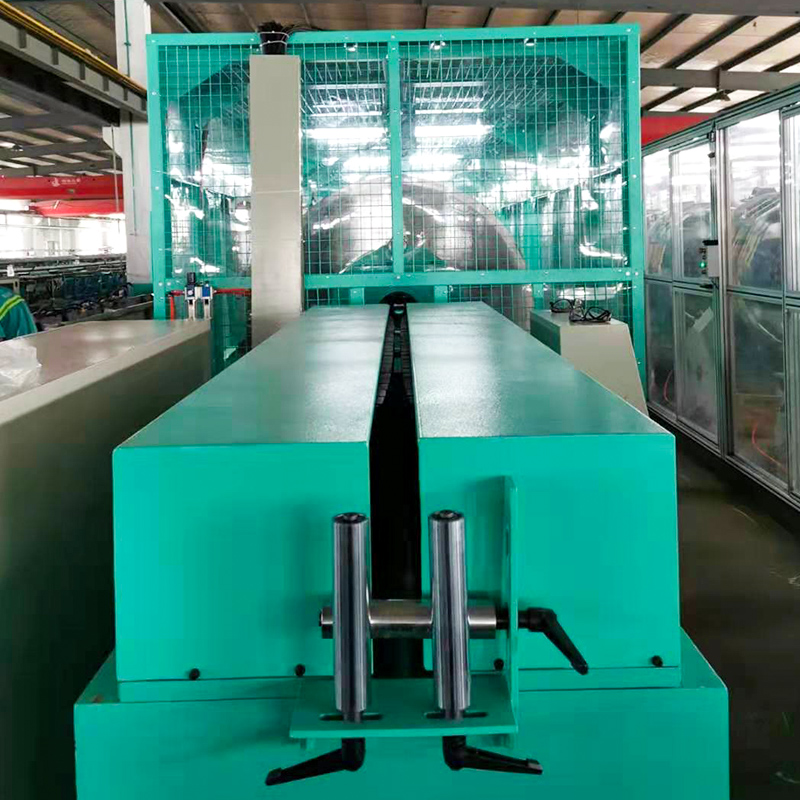
Modern high-speed equipment for hydraulic hose reinforcement.
What Exactly is a Hose Wire Spiral Winding Machine?
Before diving into the myriad of advantages, it is crucial to establish a clear definition. A Hose Wire Spiral Winding Machine is a sophisticated piece of industrial equipment engineered specifically for the reinforcement phase of hydraulic hose manufacturing. Unlike wire braiding machines, which interweave wires in a crisscross pattern, a spiral winding machine wraps high-tensile steel wires in parallel, helical layers around the inner rubber tube of the hose.
Typically, these machines apply wire in alternating directions (e.g., one layer clockwise, the next counter-clockwise) separated by thin layers of bonding rubber. This specific structural design is what allows spiral hoses (such as those meeting SAE 100R12, 100R13, and 100R15 standards) to handle significantly higher operating pressures and severe pressure impulses compared to their braided counterparts. The machine itself is a marvel of modern engineering, integrating mechanical robustness with advanced electronic controls, variable frequency drives, and precision tensioning mechanisms to handle dozens of wire bobbins simultaneously.
Key Advantages of Using a Hose Wire Spiral Winding Machine in Production
Integrating this technology into a manufacturing facility transforms the entire production dynamic. The benefits extend far beyond simply making a stronger hose; they encompass operational efficiency, economic savings, and quality assurance. Below is a detailed exploration of these advantages.
Enhanced Production Efficiency with a Hose Wire Spiral Winding Machine
In the highly competitive manufacturing sector, time is directly correlated with profitability. Traditional hose reinforcement methods, particularly older braiding techniques, can be notoriously slow and require frequent stops for bobbin changes or tension adjustments. The modern spiral winding equipment eliminates these bottlenecks through several key innovations.
First, these machines operate at exceptionally high rotational speeds. Advanced motor drives and balanced rotor designs allow the machine to apply wire at a rapid pace without inducing excessive vibration, which could compromise the integrity of the wrap. Second, the integration of Programmable Logic Controllers (PLC) and intuitive Human-Machine Interfaces (HMI) allows operators to set parameters such as pitch, speed, and tension with a few taps on a screen. The machine automatically adjusts to these settings, drastically reducing the setup time required when switching between different hose specifications.
Furthermore, modern machines are equipped with large-capacity bobbins and automated wire-break detection systems. If a wire snaps, the machine halts instantly, preventing the production of defective hose lengths. This continuous, automated workflow means that a single operator can often oversee multiple machines simultaneously, multiplying the overall output of the factory floor.
Superior Product Durability Achieved by a Hose Wire Spiral Winding Machine
The primary reason manufacturers invest in spiral technology is the unparalleled durability it imparts to the final product. Hydraulic systems in heavy machinery are subject to "water hammer" effects—sudden, violent spikes in fluid pressure. Braided hoses, while flexible, have intersecting wires that rub against each other during these pressure spikes, leading to friction, wear, and eventual failure.
The spiral winding process eliminates this internal friction. Because the wires are laid parallel to one another within each layer, they do not cross over or abrade each other. The machine applies these layers with exacting precision, ensuring that the load is distributed evenly across all the wires. This structural superiority allows hoses produced on these machines to achieve incredibly high burst pressures and withstand hundreds of thousands—sometimes over a million—impulse cycles during testing.
Additionally, the machine's ability to apply up to four or six layers of heavy-gauge steel wire makes it possible to manufacture hoses for the most demanding applications on earth, such as ultra-high-pressure water jetting, deep-sea oil extraction, and heavy hydrostatic drives. The resulting product is robust, kink-resistant, and capable of operating safely in environments where a hose failure could result in catastrophic equipment damage or human injury.
Cost Reduction and Material Optimization in a Hose Wire Spiral Winding Machine
While the initial capital expenditure for advanced winding machinery can be significant, the long-term cost reductions are substantial. Material waste is one of the largest hidden costs in hose manufacturing. If wire tension is inconsistent, or if the pitch (the distance between each spiral wrap) varies, the hose will fail quality control testing and must be scrapped. High-tensile steel wire and specialized synthetic rubbers are expensive commodities; wasting them eats directly into profit margins.
The precision of a modern spiral machine drastically reduces scrap rates. Closed-loop electronic tension control systems monitor the pull on every single wire in real-time. If a deviation is detected, the system micro-adjusts the braking force on the bobbin to correct it instantly. This ensures that exactly the right amount of wire is used—no more, no less.
Moreover, energy efficiency has become a focal point in modern machine design. Utilizing regenerative braking and high-efficiency servo motors, these machines consume less electricity per meter of hose produced compared to legacy equipment. When combined with the reduction in manual labor required for operation and maintenance, the total cost of ownership over the machine's lifespan is highly favorable.
Precision and Consistency of the Hose Wire Spiral Winding Machine
Quality assurance in hydraulic hose manufacturing is not optional; it is mandated by strict international standards (such as ISO, EN, and SAE). To meet these standards consistently, the manufacturing process must be highly repeatable. The spiral winding machine achieves this through its rigid structural design and advanced software algorithms.
The pitch of the spiral is a critical factor. If the pitch is too tight, the hose becomes overly rigid and uses too much wire. If it is too loose, the hose will not meet its pressure rating and may burst under load. The machine utilizes synchronized drives to ensure that the speed of the hose passing through the machine (the haul-off speed) is perfectly locked to the rotational speed of the winding deck. This synchronization guarantees a mathematically perfect pitch from the first meter of the production run to the last.
Furthermore, the machine maintains uniform tension across all wires simultaneously. Whether the machine is running a 4-wire configuration with 80 bobbins or a 6-wire configuration with 120 bobbins, the tension on wire #1 is identical to the tension on wire #120. This uniformity prevents the hose from twisting or bowing under pressure, ensuring a straight, stable, and reliable final product.
How Does a Hose Wire Spiral Winding Machine Work?
To fully appreciate the advantages, it is helpful to understand the step-by-step mechanics of the machine during a standard production run.
Core Preparation: The process begins with an inner rubber tube, usually supported by a flexible mandrel (a solid core made of nylon or rubber) to prevent it from collapsing under the pressure of the wire wrapping.
Let-Off and Feeding: The core is fed into the machine at a precisely controlled speed using a caterpillar haul-off or capstan system.
First Layer Winding: The hose passes through the center of the first rotating deck. Dozens of bobbins mounted on this deck release high-tensile steel wire. The deck rotates, wrapping the wires in a tight, helical pattern (e.g., clockwise) around the rubber core.
Insulation Layer: Before the next layer of wire is applied, a thin layer of unvulcanized rubber is wrapped or extruded over the first wire layer. This acts as a cushion and an adhesive binder.
Subsequent Layers: The hose then passes through a second rotating deck, which spins in the opposite direction (e.g., counter-clockwise). This alternating pattern is crucial for neutralizing torsional forces within the hose. This process is repeated for 4-wire or 6-wire hoses.
Take-Up: Once all layers are applied, the reinforced hose is spooled onto a large take-up reel, ready for the final outer cover extrusion and vulcanization (curing) processes.
Applications of Hoses Produced by a Hose Wire Spiral Winding Machine
The robust hoses manufactured by these machines are not meant for everyday, low-pressure applications. They are engineered for the most punishing environments on the planet. Understanding where these hoses are used highlights the critical importance of the machinery that makes them.
Heavy Construction Equipment: Excavators, bulldozers, and wheel loaders rely on high-pressure hydraulics to lift massive loads and break through solid rock. The hoses powering their hydraulic cylinders must withstand constant flexing and extreme pressure spikes. Spiral hoses are the industry standard for these applications.
Mining and Drilling: In underground mining and offshore oil drilling, equipment failures can be catastrophic. The blowout preventers (BOP) and heavy drilling rigs use 6-wire spiral hoses that can handle working pressures exceeding 6,000 to 10,000 PSI, ensuring safety in highly volatile environments.
Forestry and Agriculture: Timber harvesting equipment operates in rugged, unpredictable terrain. The hydraulic systems are subjected to sudden shocks as trees are gripped and cut. Spiral reinforced hoses provide the necessary burst resistance to keep these machines operational.
Industrial Manufacturing: Hydraulic presses used in metal stamping, injection molding machines, and heavy material handling systems require consistent, high-pressure fluid delivery. The structural integrity provided by spiral winding ensures these stationary machines operate with precision and safety.
Choosing the Right Hose Wire Spiral Winding Machine for Your Needs
Investing in this level of machinery is a major strategic decision for any manufacturer. Not all machines are created equal, and selecting the right equipment requires careful consideration of your specific production goals. You must evaluate the maximum hose diameter you intend to produce, the number of wire layers required (e.g., 4-spiral vs. 6-spiral), and the floor space available in your facility.
Furthermore, the technological features of the machine should align with your workforce's capabilities. Opting for a machine with advanced PLC controls, remote diagnostic capabilities, and automated tensioning can drastically reduce the learning curve for operators and minimize human error. It is also vital to consider the quality of the components used in the machine itself—such as the bearings, servo motors, and braking systems—as these dictate the machine's longevity and maintenance requirements.
Most importantly, the success of your investment relies heavily on the partner you choose. It is highly recommended to collaborate with a reputable hydraulic hose production equipment supplier. A reliable supplier does more than just deliver a machine; they provide comprehensive installation support, operator training, spare parts availability, and ongoing technical assistance. Partnering with industry experts ensures that your machine is calibrated perfectly for your specific raw materials and production environment, guaranteeing maximum uptime and return on investment.
Maintenance Tips for Your Hose Wire Spiral Winding Machine
To ensure that your equipment continues to deliver the advantages of speed, precision, and efficiency over a long lifespan, a rigorous preventative maintenance schedule is mandatory. Neglecting maintenance can lead to tension inconsistencies, premature wear of mechanical parts, and costly unscheduled downtime.
Daily Inspections: Operators should begin every shift by checking the wire pathways. Any buildup of dust, rubber particles, or wire shavings must be cleaned. The ceramic or tungsten carbide eyelets through which the wire passes should be inspected for grooving or wear, as damaged eyelets will scratch the wire and weaken the hose. Additionally, the pneumatic and hydraulic systems controlling the machine's brakes and tensioners should be checked for leaks.
Weekly and Monthly Maintenance: Lubrication is the lifeblood of heavy rotating machinery. The main bearings supporting the winding decks must be greased according to the manufacturer's specifications. The electronic tension control systems should be calibrated periodically to ensure the digital readouts match the actual physical tension being applied to the wires. Belts and drive chains should be inspected for proper tension and signs of fraying.
Annual Servicing: A comprehensive annual audit should be conducted, ideally with the assistance of the equipment supplier's technicians. This includes software updates for the PLC, a thorough inspection of the motor drives, and the replacement of any wear parts such as brake pads on the bobbin carriers. Maintaining a detailed log of all maintenance activities helps in predicting component lifespans and scheduling replacements before they fail.
Frequently Asked Questions About the Hose Wire Spiral Winding Machine
Q: What is the main difference between a spiral winding machine and a braiding machine?
A: A braiding machine weaves wires over and under each other in a crisscross pattern, which is excellent for flexibility but creates friction points. A spiral winding machine lays wires parallel to each other in alternating helical layers. This eliminates internal friction and allows the hose to withstand much higher pressures and severe impulses.
Q: Can a Hose Wire Spiral Winding Machine handle different wire diameters?
A: Yes. Modern machines are highly versatile and feature adjustable tensioning systems that can accommodate a wide range of high-tensile steel wire diameters. Operators simply input the new wire specifications into the PLC, and the machine adjusts its braking force accordingly.
Q: How does the machine prevent wire breakage during high-speed production?
A: These machines utilize closed-loop electronic tension control. Sensors continuously monitor the tension on every bobbin. If the tension spikes, the system instantly reduces the braking force to prevent a break. Furthermore, if a break does occur, automated sensors detect the loss of tension and trigger an emergency stop in milliseconds, preventing the production of scrap hose.
Q: Is it difficult to train operators for this equipment?
A: While the machinery is complex, the user interfaces are designed to be intuitive. Modern HMIs feature touchscreen controls with visual graphics, recipe management systems (saving parameters for different hose types), and built-in troubleshooting guides. With proper training from the equipment supplier, operators can become proficient relatively quickly.
Conclusion: Summary of Hose Wire Spiral Winding Machine Advantages
In conclusion, the integration of a Hose Wire Spiral Winding Machine into a production line represents a monumental leap forward in manufacturing capability. The advantages are clear and measurable across multiple facets of production. By transitioning to this advanced technology, manufacturers achieve unprecedented production efficiency through high-speed automation, rapid setup times, and continuous operation capabilities.
More importantly, the machinery guarantees superior product durability, allowing the creation of ultra-high-pressure hoses that meet the rigorous demands of modern heavy industry, mining, and construction. The precision and consistency afforded by electronic tension controls and synchronized drives ensure that every meter of hose meets strict international safety standards, completely eliminating the guesswork from the reinforcement process.
Finally, the cost reduction and material optimization benefits cannot be overstated. By minimizing scrap rates, optimizing wire usage, and reducing the labor required for operation, these machines offer a rapid return on investment. For any facility aiming to produce top-tier hydraulic hoses, adopting state-of-the-art spiral winding technology is not just an operational upgrade; it is a vital strategic advantage in a demanding global market.