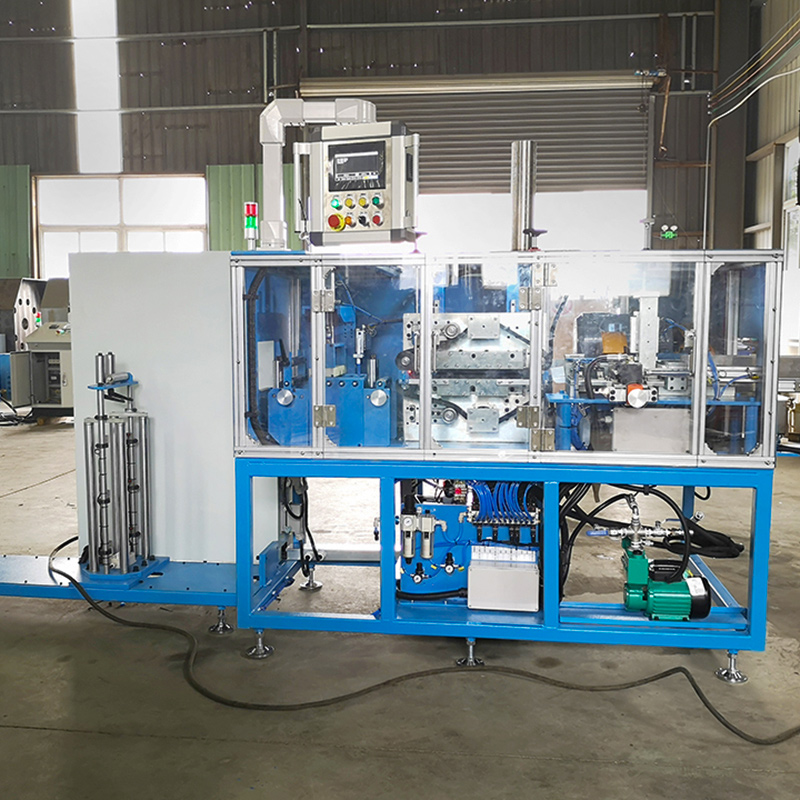
Improper skiving remains a primary cause of severe hydraulic hose assembly failure today. These avoidable failures frequently result in blown fittings, unexpected equipment downtime, and significant workplace safety hazards. Fluid power systems continue pushing toward much higher operating pressures globally. Consequently, advanced multi-spiral hoses demand extreme preparation precision. The acceptable margin for error during outer rubber cover removal shrinks significantly under these demanding conditions. A fraction of a millimeter determines whether an assembly holds pressure or fails catastrophically.
This comprehensive guide provides a practical framework for evaluating and selecting your ideal preparation equipment. You will discover how to match machinery capabilities directly to your daily production volume. We will explore methods to maintain strict compliance requirements across SAE, EN, and ISO standards. Implementing the right technology ultimately elevates your quality control operations and protects your brand reputation.
Key Takeaways
Production Volume Dictates Setup: High-volume OEM production requires an automatic hose skiving machine to maintain cycle times, while MRO/mobile operations may prioritize compact, manual units.
Tooling Precision is Non-Negotiable: The machine must remove the exact depth of the elastomeric cover without compromising the wire braid or spiral reinforcement.
Combined vs. Dedicated: A combination hydraulic hose cutting skiving machine saves floor space but can create workflow bottlenecks in high-throughput environments.
The Business Case for Upgrading Your Hose Skiving Machine
Many facilities still rely heavily on outdated preparation methods. Operators often depend entirely on physical feel during the stripping process. This subjective approach produces highly inconsistent depths across different production batches. You will notice significant variations when inspecting large assembly runs. Assembly integrity suffers directly from these manual inconsistencies. The consequences appear quickly during pressure testing or field operation.
Over-skiving damages the crucial wire reinforcement layer immediately. Broken or nicked wires dramatically reduce the overall burst pressure capabilities of the assembly. Conversely, under-skiving leaves a thin layer of elastomer on the reinforcement. This residual rubber prevents ferrule teeth from gripping the steel properly during crimping. Consequently, the fitting may blow off under standard operating pressures. Standardizing your preparation equipment resolves these critical issues efficiently. It streamlines tooling changeovers across different shifts. You also minimize scrap rates during continuous operations. Reliable machinery ensures every cut meets strict international requirements consistently.
Skiving Defect
Physical Consequence
System Impact
Over-skiving
Severed reinforcement wires
Dramatically reduced burst pressure
Under-skiving
Residual rubber on steel wires
Fitting blow-off risk under load
Uneven Depth
Asymmetrical ferrule grip
Slow fluid leakage over time
Types of Skiving Equipment: Solution Categories
Manual and Benchtop Skivers
These compact units serve specific operational needs beautifully. They work best for mobile repair vans and field maintenance crews. Low-volume distributors also rely on them for occasional repairs. Most models feature a simple hand-cranked mechanism. Some include a basic motorized operation for slight efficiency gains. They offer exceptional portability across diverse job sites. However, they rely heavily on correct operator technique. You must control the feed rate manually throughout the process. This requirement introduces potential human error. Consistent results require highly experienced operators.
Automatic Hose Skiving Machine
High-volume production environments demand superior consistency. An automatic hose skiving machine delivers exactly this reliability. These units fit perfectly into busy OEM assembly lines. Continuous manufacturing facilities utilize them to maintain tight cycle times. They typically feature robust pneumatic or electric clamping systems. Operators use convenient foot pedals to control the feeding process. This hands-free approach ensures highly repeatable feed rates. It guarantees uniform depth across hundreds of consecutive cuts. Furthermore, automated systems drastically reduce physical operator fatigue. Consistent clamping prevents the material from spinning out of control during operation.
Floor space often dictates equipment selection in crowded facilities. A hydraulic hose cutting skiving machine provides a compelling solution. This combined unit consolidates two crucial workflows into one footprint. Operators can slice the material and strip it at the same workstation. It minimizes material handling time significantly. However, you must carefully consider the inherent workflow risks. If the cutting blade mechanism requires unexpected maintenance, the entire unit stops. You lose both capabilities simultaneously. This bottleneck can paralyze a high-throughput environment quickly. Evaluate your redundancy plans before choosing a combined setup.
Core Evaluation Criteria for Your Production Line
Capacity and Diameter Range
You must verify the maximum capacity of any prospective equipment. Standard facilities typically process diameters ranging from 1/4" to 2". Industrial operations often require heavy-duty models handling up to 3" diameters. Confirm full compatibility across various reinforcement types. The unit must process standard wire-braid models smoothly. It also needs enough power for tough multi-spiral designs. Ensure it handles dense multi-spiral specifications without stalling or overheating.
Internal vs. External Skiving Capabilities
Examine your specific fitting requirements closely. Many standard applications require only external cover removal. Heavy-duty applications often utilize interlock fittings instead. These specific fittings demand internal tube removal alongside external stripping. Determine if the equipment handles both operations efficiently. Evaluate the mechanical switchover process between external and internal tooling. A slow transition wastes valuable production minutes. Look for models featuring rapid-change mechanisms.
Tooling Design and Changeover Speed
Tooling design directly influences daily output rates. You want quick-change mandrels for fast diameter adjustments. Preset cutting tools eliminate tedious manual calibration steps. Operators can switch sizes and resume production instantly. Assess the availability of replacement carbide blades in your region. Multi-spiral materials dull standard blades rapidly. Hardened carbide components maintain their sharp edge significantly longer. Proper tooling choices reduce overall machine downtime.
Debris Management and Safety
The stripping process generates substantial amounts of rubber dust. This fine debris creates immediate workplace hazards. Evaluate machines featuring integrated extraction systems. Active suction removes particles before they foul the internal mechanisms. It protects operators from inhaling harmful airborne particulates. Always check for strict CE compliance markings. The equipment must include accessible emergency stop buttons. Transparent safety guards are absolutely essential. They protect workers while maintaining clear visibility.
Integrated vacuum extraction ports positioned near the cutting head
Quality Assurance: Evaluating the Finished Hose Skived by Automatic Hose Skiving Machine
Visual Inspection
Every processed assembly requires strict visual validation. We must examine the finished hose skived by automatic hose skiving machine carefully. The exposed wire reinforcement must appear bright and completely clean. You should see absolutely zero rubber residue clinging to the braids. Inspectors must verify the complete absence of broken wires. Even a single nicked spiral compromises the entire assembly. Supervisors should conduct random spot checks throughout every shift. This practice maintains high quality control standards consistently.
Dimensional Tolerance
Visual checks cannot replace precise dimensional measurements. The stripped length must match the fitting manufacturer’s specifications exactly. Operators typically measure this tolerance using digital calipers. They compare the results directly against approved crimp charts. Too short, and the ferrule loses vital grip area. Too long, and exposed wire remains outside the fitting. Strict adherence to dimensional tolerances prevents catastrophic field failures.
Transition Zone
Pay close attention to the distinct transition zone. This is where the stripped area meets the intact outer cover. The cut must be perfectly clean and square. An uneven or jagged transition invites severe problems later. Moisture will inevitably penetrate a poorly squared edge. This ingress causes rapid wire corrosion hidden beneath the fitting. A clean square shoulder ensures the ferrule seats perfectly against the cover.
Implementation Risks
You must anticipate specific risks when adopting new preparation technology. Proactive management ensures smooth integration into your daily operations.
Operator Training
Automated machinery still requires knowledgeable human oversight. You must invest time in comprehensive initial setup training. Operators need to understand precise tool calibration procedures thoroughly. They must recognize common mechanical issues quickly. Effective troubleshooting keeps production lines moving smoothly. Do not assume automated means entirely hands-off. Proper education empowers your team to maximize equipment efficiency.
Tooling Wear
Processing heavy multi-spiral materials accelerates blade deterioration. High-tensile steel spirals aggressively wear down cutting edges. You must calculate the projected lifespan of your cutting tools accurately. Plan your replacement schedules before tools fail completely. Dull blades tear the elastomer instead of cutting it cleanly. Torn rubber leads directly to rejected assemblies and wasted material.
Maintenance
Daily equipment maintenance is entirely non-negotiable. Rubber debris accumulates rapidly inside the clamping mechanisms. Operators must perform thorough cleaning routines every single shift. Failure to maintain the chuck leads directly to out-of-round stripping. The material slips, causing uneven depths and immediate scrap. Establish strict maintenance checklists for all operators.
Vendor Support
Machinery downtime paralyzes assembly operations instantly. Prioritize manufacturers offering strong localized support networks. You need guaranteed fast delivery for critical replacement components. Review the operational documentation provided by the vendor carefully. Clear, detailed manuals simplify routine maintenance significantly. Responsive technical support resolves unexpected mechanical issues quickly.
Implement strict daily cleaning schedules for clamping mechanisms.
Monitor blade sharpness actively during high-volume runs.
Document all maintenance activities in a central facility log.
Keep critical wear parts stocked locally at all times.
Conclusion
Selecting the appropriate preparation equipment demands careful operational analysis. You must balance your daily throughput requirements against strict assembly specifications. Smart resource allocation ensures long-term manufacturing success. The right machinery drastically reduces scrap rates while elevating worker safety.
Do not finalize equipment decisions based purely on technical brochures. Request a comprehensive test run from the manufacturer directly. Provide them with your specific material brands and precise fittings. Observing the machinery handle your actual daily materials reveals its true capabilities.
Your immediate next step involves conducting a formal time-study. Consult an equipment specialist to evaluate your current manual processes. Analyze your existing scrap rates and changeover delays thoroughly. This hard data will clearly justify your impending machinery upgrade and streamline your operations.
FAQ
Q: Do all hydraulic hoses require skiving?
A: No. Many standard pressure hoses can be assembled using no-skive fittings. Skiving is typically mandatory for high-pressure multi-spiral hoses or when using specific heavy-duty interlock fittings. Always follow the specific instructions provided by the fitting manufacturer to ensure a safe assembly.
Q: Can one machine perform both internal and external skiving simultaneously?
A: Some advanced automatic models offer simultaneous internal and external skiving. However, this process requires highly specialized, precise tooling setups. Manufacturers usually reserve this specific feature for high-volume, uniform batch production where cycle time reduction is critical.
Q: How often do skiving blades need to be replaced?
A: Blade lifespan depends entirely on the hose material, reinforcement type, and production volume. High-tensile spiral hoses will dull blades much faster than standard braided hoses. Operators must inspect blades daily for chips or dullness as part of your standard QA process.