1. Introduction
Manual hose handling often limits modern production speed. Is it still efficient in high-volume manufacturing?Hose Wrapping and Unwrapping Machines change how hoses move, coil, and package.They directly affect efficiency, safety, and quality.
In this article, you will learn the key benefits they bring to hose production.You will see why many manufacturers now rely on them.
2. The Core Benefits Hose Wrapping and Unwrapping Machines Bring to Hose Production
Aspect | Manual Hose Wrapping | Automated Hose Wrapping and Unwrapping Machines |
Wrapping speed | Operator-dependent | Consistent and controlled |
Coil consistency | Varies by worker | Uniform across batches |
Labor intensity | High physical effort | Minimal manual handling |
Risk of hose damage | Higher due to errors | Reduced through guided control |
Packaging appearance | Inconsistent | Professional and repeatable |
Suitability for scale | Limited | High-volume ready |
2.1 Improving Production Efficiency and Overall Throughput
In many hose factories, manual wrapping slows down the entire line.Operators must constantly adjust tension, guide the hose, and correct alignment.As speed increases, accuracy drops, which forces frequent stops and rework.
This creates a natural ceiling for production capacity.Hose Wrapping and Unwrapping Machines remove this limitation by maintaining a stable wrapping speed throughout each cycle.They operate continuously without fatigue, allowing upstream extrusion and downstream packaging processes to run more smoothly.Production output becomes predictable rather than dependent on operator experience or physical condition.
As a result, manufacturers often see higher daily throughput without extending shifts or adding staff.This efficiency gain becomes especially valuable in high-volume or multi-shift operations.
2.2 Reducing Labor Dependency and Operator Fatigue
Manual hose handling places heavy physical demands on workers.
Lifting, pulling, and rotating hoses for long periods leads to fatigue and strain injuries.Over time, productivity drops and absenteeism rises.Automation significantly reduces this burden.
Operators shift from manual handling to supervision and adjustment tasks.
This not only lowers physical stress but also improves job satisfaction and retention.Reducing labor dependency also protects production during labor shortages or peak seasons.Factories gain more operational stability and flexibility.
2.3 Enhancing Consistency in Hose Coiling and Packaging Quality
Consistency is a key indicator of process control.
When hoses are wrapped manually, coil diameter, tightness, and alignment vary from one operator to another.
This inconsistency affects storage efficiency and visual presentation.Hose Wrapping and Unwrapping Machines apply constant tension and predefined parameters.
Each coil follows the same standard regardless of shift or operator.
Uniform packaging improves stacking, transport, and customer perception.For B2B customers, consistent packaging signals professionalism and reliability.
It reduces complaints and strengthens long-term relationships.
2.4 Lowering the Risk of Hose Damage During Handling and Storage
Improper wrapping can introduce twists, kinks, or surface abrasion.
These defects may not appear during production but can cause failure during installation or use.
The cost of such failures extends beyond material waste to warranty claims and brand damage.Automated wrapping guides hoses smoothly through controlled paths.
Sudden bending and friction are minimized.
This protects both internal structure and outer surfaces.Lower damage rates mean less rework and fewer rejected shipments.
Over time, this directly improves profit margins.
2.5 Improving Workplace Safety and Reducing Injury Risks
Hose coils can be heavy and awkward to manage manually.
Injuries often occur during lifting or repositioning.
Safety incidents disrupt operations and increase insurance costs.Hose Wrapping and Unwrapping Machines reduce direct human contact with moving hoses.
Guarded zones and controlled motion improve compliance with safety standards.
Operators work in safer, more predictable environments.Improved safety performance also strengthens a manufacturer’s position during customer audits.
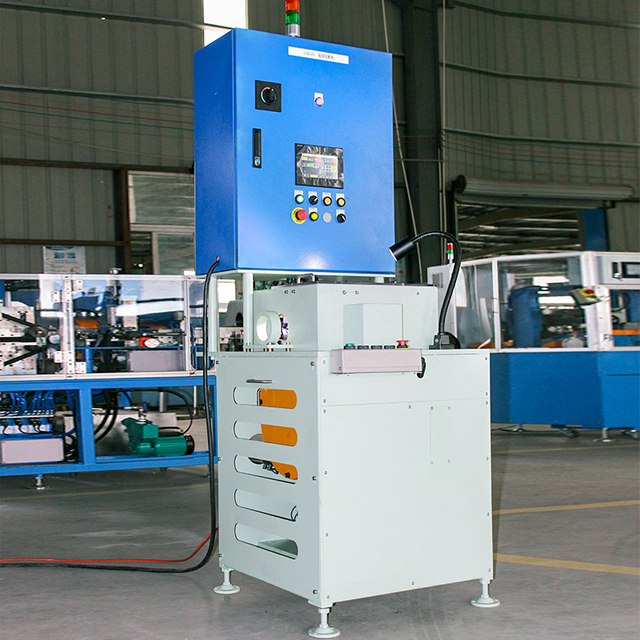
2.6 Supporting Scalable, Continuous, and High-Volume Hose Production
Manual processes struggle to scale efficiently.
Increasing output usually requires more workers and supervision.
Training new operators also introduces quality variation.Automation scales output without increasing headcount.
Machines perform consistently across longer shifts and higher volumes.
This supports continuous production models and future expansion plans.
Automation should be introduced before volume growth peaks, not after bottlenecks appear.
3. How Hose Wrapping and Unwrapping Machines Optimize Production Workflow
3.1 Streamlining Transitions Between Production Stages
In many plants, hoses wait between extrusion, testing, and packaging.
Manual handling slows transfers and creates temporary storage needs.
These pauses reduce overall equipment effectiveness.Hose Wrapping and Unwrapping Machines connect stages more smoothly.
They accept hoses directly from upstream equipment and deliver them in ready-to-process form.
Workflow becomes continuous instead of segmented.This reduces idle time and simplifies layout planning.
3.2 Creating Predictable and Repeatable Hose Handling Processes
Predictability matters in production planning.
Manual wrapping varies with experience, fatigue, and shift changes.
Output quality fluctuates as a result.Machines follow fixed parameters every cycle.
Once optimized, these settings remain stable.
This allows planners to forecast output and schedule downstream operations accurately.Repeatability also simplifies training and supervision.
3.3 Reducing Downtime Caused by Manual Handling Errors
Tangling, misalignment, and loose coils cause frequent stops.Operators must intervene to correct issues.
Small delays accumulate into significant downtime.Automated systems reduce these errors dramatically.
When issues occur, they are easier to diagnose and correct.
Overall line availability improves.
Note: Reduced downtime improves delivery reliability without increasing capacity.
4. Cost Advantages of Using Hose Wrapping and Unwrapping Machines
4.1 Long-Term Labor Cost Reduction Through Automation
Labor remains one of the highest ongoing costs in hose manufacturing.
Manual wrapping requires multiple operators per line.
Absences or turnover disrupt schedules.Automation reduces the number of workers required for hose handling.
One operator can oversee multiple machines.
Labor costs become more stable and predictable.Over several years, these savings often exceed the initial investment.
4.2 Minimizing Material Waste, Scrap, and Rework Costs
Damaged hoses lead to scrap or rework.Both consume time, materials, and energy.Hidden waste often goes unnoticed in manual processes.By protecting hose integrity, automated wrapping reduces scrap rates.
Less rework means smoother production and lower unit costs.
Savings grow as volumes increase.
4.3 Accelerating Return on Investment for Medium- and High-Volume Producers
The return on investment depends on utilization.High-volume lines benefit most from automation.Savings accumulate faster through labor reduction and waste control.Many manufacturers report payback within a short operational period (data needs verification).After payback, machines contribute directly to profit.
ROI improves fastest when machines operate across multiple shifts.
5. Quality Control Improvements Enabled by Hose Wrapping and Unwrapping Machines
5.1 Preserving Hose Shape, Structure, and Dimensional Accuracy
Hoses settle during cooling and storage.Uneven wrapping distorts shape and affects performance.
This creates issues during installation.Automated wrapping maintains uniform geometry.
Dimensional accuracy improves across batches.
Product performance becomes more reliable.
5.2 Supporting Consistent Inspection and Pressure-Testing Procedures
Uniform coils simplify inspection and testing.
Test stations receive hoses in predictable form.
Setup time decreases and testing accuracy improves.Consistent handling also supports automated inspection systems.
5.3 Enhancing Customer Perception Through Uniform, Professional Packaging
Packaging quality influences buying decisions.Uneven coils suggest poor process control.Customers associate consistency with reliability.Uniform wrapping improves visual appeal and trust.This supports repeat orders and long-term contracts.
Packaging quality often affects supplier evaluations in B2B markets.
6. Flexibility Across Different Hose Types and Production Requirements
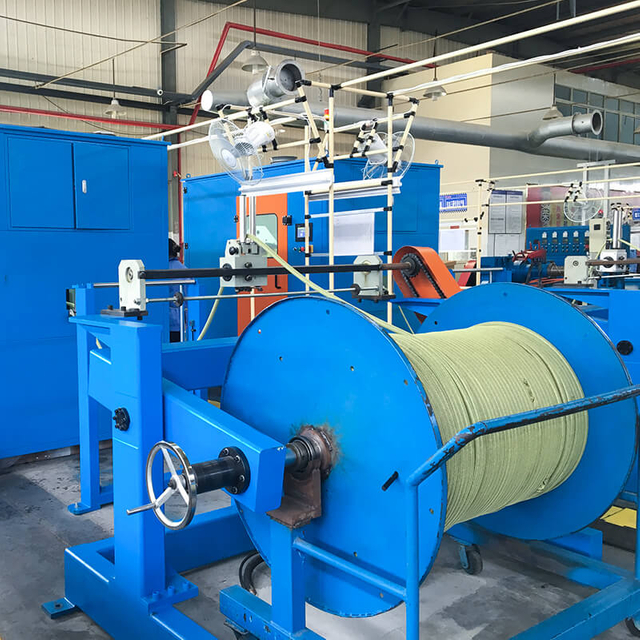
6.1 Handling Multiple Hose Diameters and Coil Lengths
Modern machines offer adjustable parameters.They handle a wide range of diameters and lengths.
Changeovers are fast and repeatable.This supports diversified product portfolios.
6.2 Adapting to Different Hose Materials and Stiffness Levels
Different materials behave differently.Rubber, PVC, and composite hoses require different tension levels.Manual adjustment is inconsistent.Machines adjust speed and force precisely.They maintain quality across materials and applications.
6.3 Customization Options for Specialized Hose Production Lines
Some industries demand special handling.Examples include food-grade or high-pressure hoses.
Machines can integrate custom guides and controls.This ensures compliance and performance consistency.
7. Integration Benefits Within Automated Hose Production Lines
7.1 Compatibility with Extrusion, Cutting, and Testing Equipment
Automation works best when systems communicate.
Wrapping machines integrate with upstream and downstream equipment.
Signals synchronize speed and operation.This reduces manual coordination and errors.
Production Stage | Common Challenge | Benefit Provided by Hose Wrapping and Unwrapping Machines |
Extrusion output | Irregular hose handling | Stable and continuous transfer |
Cooling process | Shape distortion | Controlled coiling tension |
Inspection | Time-consuming setup | Uniform coils simplify checks |
Pressure testing | Alignment issues | Predictable hose positioning |
Packaging | Inconsistent bundles | Standardized, stackable coils |
Storage & transport | Tangling or damage | Improved protection and handling |
7.2 Supporting Smart Manufacturing and Production Data Tracking
Automated systems generate valuable data.
Cycle times, output rates, and error events become visible.
Managers gain insight into performance trends.This supports continuous improvement and predictive maintenance.
7.3 Preparing Hose Factories for Future Automation Upgrades
Automation adoption builds experience.
Teams become comfortable with digital control and data use.
Future upgrades integrate more smoothly.This strengthens long-term competitiveness.
8. Conclusion
This article explains how Hose Wrapping and Unwrapping Machines improve hose production efficiency.
They reduce labor pressure, protect hose quality, and support stable scaling.By automating handling, manufacturers gain consistency, safety, and cost control.These benefits strengthen long-term competitiveness in demanding markets.Nanjing Hydraulic Sun Technology Co., Ltd. provides advanced hose handling solutions.
Its machines help producers achieve reliable output and professional packaging.
FAQ
Q: What are Hose Wrapping and Unwrapping Machines?
A: Hose Wrapping and Unwrapping Machines automate hose coiling and release during production.
Q: Why do manufacturers use Hose Wrapping and Unwrapping Machines?
A: Hose Wrapping and Unwrapping Machines improve efficiency, safety, and packaging consistency.
Q: How do Hose Wrapping and Unwrapping Machines help production speed?
A: Hose Wrapping and Unwrapping Machines reduce manual handling and downtime.
Q: Are Hose Wrapping and Unwrapping Machines suitable for different hose sizes?
A: Hose Wrapping and Unwrapping Machines support adjustable diameters and lengths.
Q: What are the main cost benefits?
A: They lower labor costs, reduce waste, and improve long-term ROI.
Q: What issues do they help prevent?
A: They reduce hose damage, tangling, and operator fatigue.


