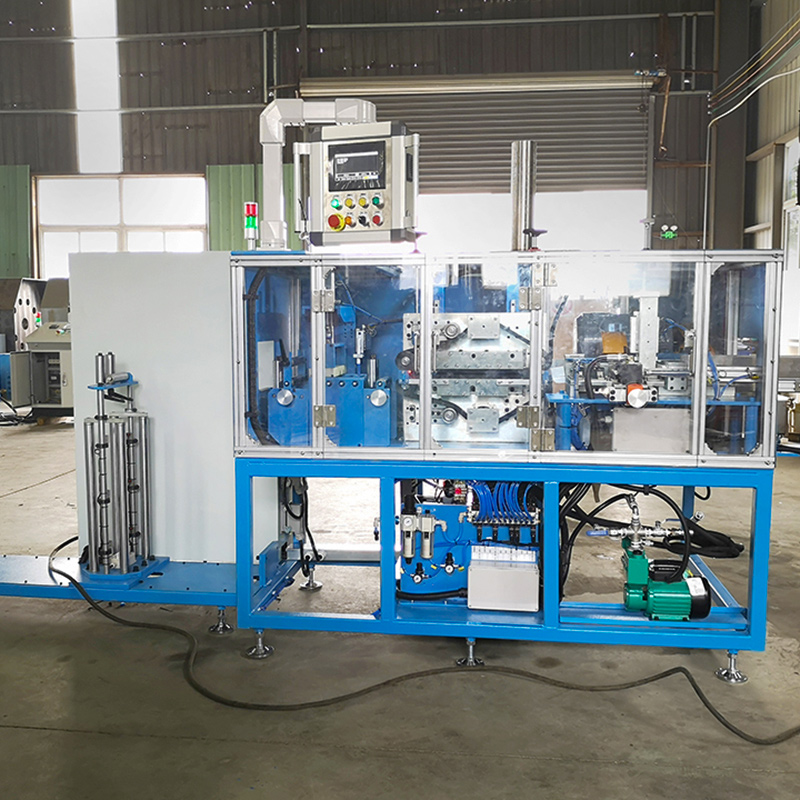
Skiving stands as the most critical point of failure in high-pressure hydraulic assemblies. Here, mere millimeters of variance separate a compliant hose from a catastrophic blowout. A precise cut ensures safety, while a flawed one guarantees eventual disaster.
The industry has shifted heavily from manual preparation to standardized, high-volume production lines. As you scale operations, this increased volume naturally amplifies the financial penalty of inconsistent skiving. Operators can no longer rely purely on intuition when processing hundreds of identical assemblies daily.
Preventing dangerous blow-offs and fluid leaks requires moving far beyond basic operator training. You must implement structured root-cause analysis, deploy precise tooling, and establish verifiable quality control workflows. In this guide, we will explore the most common skiving defects and outline exact strategies to eliminate them from your production floor.
Key Takeaways
Over-skiving and under-skiving account for the majority of premature fitting blow-offs in high-pressure applications.
Identifying the Root Causes of Common Skiving Failures
You cannot improve what you do not accurately diagnose. Skiving defects create severe business impacts that ripple across your entire operation. A single failed hose assembly often triggers expensive warranty claims. It causes unplanned downtime for heavy machinery. Most importantly, it introduces severe safety liabilities for end-users operating near high-pressure systems.
To eliminate these risks, we must dissect the three primary failure modes that plague hydraulic hose preparation.
Failure Mode 1: Over-Skiving (Wire Damage)
The high-tensile steel wire layer acts as the primary structural skeleton of the hose. It provides the necessary burst strength. Over-skiving occurs when the cutting tool removes too much material and damages this critical reinforcement layer. The immediate symptom is highly visible. You will see broken, frayed, or deeply scored steel wire reinforcement.
The root cause usually links back to improper setup. An operator might select an incorrect mandrel size for the specific hose inner diameter. Alternatively, they might use dull skiving blades. A dull blade drags against the wire braid instead of slicing cleanly through the outer rubber cover. This friction generates excess heat and structural stress.
The outcome of over-skiving is non-negotiable. The assembly loses significant burst pressure capacity. The damaged wires will snap under repeated pressure spikes. You must mandate the immediate rejection of any assembly showing wire damage.
Failure Mode 2: Under-Skiving (Rubber Residue)
Under-skiving represents the exact opposite problem. Here, the machine fails to remove enough of the outer cover. The primary symptom involves visible patches of elastomer remaining stubbornly adhered to the wire layer. You might also notice a thin film of rubber spanning the entire skived section.
This defect stems from misaligned cutting tools. It can also happen if the operator sets an insufficient skive length. Sometimes, worn tool holders allow the blade to deflect away from the wire.
When you crimp an under-skived hose, you create a hidden hazard. The fitting teeth must bite directly into bare steel. If rubber residue blocks this contact, the teeth grip soft elastomer instead. Rubber compresses and shifts under stress. During pressure spikes, the fitting simply slides off the hose. This leads to an explosive fitting blow-off.
A perfect skive must remain perfectly cylindrical. Uneven skive transitions manifest as ovality issues. The skived area looks tapered or out of round. You might notice one side of the hose shows bare wire while the opposite side retains thick rubber.
The root cause heavily implicates outdated manual techniques. Uneven manual feeding causes irregular cutting depths. An operator pushing the hose too hard creates a distorted profile. Furthermore, worn bearings in older equipment introduce mechanical wobble. You cannot achieve uniform 360-degree crimp compression over an uneven surface. This defect guarantees fluid leaks.
Common Skiving Failures Troubleshooting Matrix
Failure Mode
Visual Symptom
Primary Root Cause
Structural Consequence
Over-Skiving
Frayed or broken steel wires
Incorrect mandrel or dull blade
Loss of burst pressure capacity
Under-Skiving
Rubber patches on wire layer
Misaligned tool or short length
Fitting blow-off under load
Uneven Transitions
Tapered or oval profile
Uneven feeding or worn bearings
Inconsistent crimp leading to leaks
Equipment Evaluation: Mitigating Risk with an Automatic Hydraulic Hose Skiving Machine
Solving skiving failures requires transitioning from reactive troubleshooting to proactive defect prevention. You cannot simply instruct operators to "be more careful." Human hands cannot maintain micron-level consistency hour after hour. True reliability demands upgrading your physical equipment.
Manual vs. Automated Variables
A standard manual hose skiving machine relies heavily on operator "feel." The operator decides how fast to push the hose into the blade. They decide when to stop. This introduces dozens of uncontrolled variables. Operator fatigue alone causes significant quality drift near the end of a shift.
In contrast, automated systems eliminate these variables. They utilize mechanical hard-stops and programmable feed rates. The machine handles the physical exertion. It applies the exact same torque and cutting depth every single time. This mechanical discipline replaces guesswork with verifiable precision.
Key Evaluation Dimensions for Procurement
When selecting new equipment, you must evaluate specific performance metrics. Avoid choosing a machine based purely on generic specifications. Focus on how it handles real-world production demands.
Repeatability: Ask the manufacturer for data on continuous runs. Can the machine hold strict tolerances of ±0.1mm across a 500-piece production run? Consistent repeatability prevents sudden batch rejections.
Changeover Speed: Production floors handle multiple hose types daily. Measure the time required to swap mandrels and blades for different hose outside diameters (ODs). Fast changeovers keep your workflow uninterrupted.
Footprint & Ergonomics: Evaluate the physical design. Does the equipment reduce operator fatigue? Does it isolate heavy vibration? A well-designed machine protects your workforce from repetitive strain injuries.
Implementation Risk and Return
You must weigh the upfront capital expenditure of a new machine carefully. However, you should balance this cost against immediate operational savings. Automated equipment drastically reduces scrap materials. You throw away fewer expensive fittings and premium hoses. Additionally, it reclaims countless labor hours previously lost to rework and manual measurement corrections.
QA Standards: Inspecting a Finished Hose Skived by a Hose Skiving Machine
Producing a high-quality cut solves only half the problem. You must verify the results before moving to the crimping stage. Strict quality assurance protocols protect your assembly integrity. You need to define clear success criteria for a production-ready skive.
Visual Checkpoints
Every operator must perform a rapid but thorough visual inspection. You look for specific indicators of a healthy cut.
Wire Condition: The exposed wire braid must look bright and completely undamaged. You cannot permit zero tolerance for severed strands. Discolored wire often indicates a dull blade causing heat friction.
Transition Quality: Look closely at the transition shoulder. This is the exact point where the remaining rubber cover meets the exposed wire. It requires a clean, perfectly squared-off edge. A ragged edge prevents the fitting shell from seating correctly.
Dimensional Verification
Visual checks serve as a basic baseline. However, they lack the precision required for high-pressure applications. You must implement strict dimensional verification for every finished hose skived by hose skiving machine.
Use calibrated digital calipers to measure the final skived diameter. Take measurements at multiple points around the circumference. You must compare these precise readings against the fitting manufacturer's exact specifications. The fitting manufacturer designs their crimp charts based on specific skive diameters.
Best Practice Warning: Never rely solely on visual checks. A dimensional mismatch of even 0.5mm alters crimp compression ratios entirely. If the skive diameter is too large, you risk crushing the inner tube. If it is too small, the fitting will lack sufficient grip, leading to guaranteed blow-offs.
Completing the Assembly: Debris Management and Final Validation
The assembly process does not end when the crimper opens. You must address the invisible hazards created during preparation. You must also validate the mechanical strength of the final product.
The Hidden Danger of Skiving Dust
We must acknowledge a harsh reality of hose preparation. The cutting and skiving process inherently generates significant contamination. It produces fine rubber dust. It also creates microscopic metal shavings. These abrasive particles settle inside the hose tube.
If you fail to remove this debris, it flushes directly into the customer's hydraulic system. This contamination destroys expensive hydraulic pumps. It scores cylinder walls and clogs sensitive directional valves. Modern hydraulic systems operate with incredibly tight clearances. They cannot tolerate even minor particulate contamination.
Integration of Cleaning Protocols
You must establish strict cleaning protocols immediately following the cutting and skiving stages. Firing a specialized cleaning projectile through the hose is non-negotiable. This process utilizes compressed air to shoot a dense foam pellet through the inner tube. The pellet expands slightly, wiping the internal walls completely clean. It forcefully ejects all rubber dust and metal micro-shavings.
Proof Testing and Compliance
Final validation ensures mechanical integrity. You must couple your meticulous preparation protocol with a hose pressure testing and cleaning machine. This equipment acts as your final gatekeeper against catastrophic field failures.
We use static pressure holding to verify the assembly. This process exposes the hose to extreme conditions safely inside a protective chamber. Review the standard testing matrix below to understand typical proof testing parameters.
Standard Static Pressure Testing Matrix
Application Type
Working Pressure (WP)
Required Test Pressure
Hold Duration
Standard Industrial
3,000 PSI
1.5x WP (4,500 PSI)
60 Seconds
High-Impulse Mobile
5,000 PSI
2.0x WP (10,000 PSI)
60 Seconds
Extreme Mining/Offshore
6,000+ PSI
2.0x WP (12,000+ PSI)
120 Seconds
Logging these test results is crucial for compliance tracking. Documenting successful pressure holds provides verifiable safety documentation for end-users. It proves you follow rigorous manufacturing standards. It also heavily protects your facility from liability in the event of equipment disputes.
Conclusion
High-yield hydraulic assembly requires a fundamental shift in perspective. You must treat hose preparation not as a manual chore, but as a rigorous precision machining process. Every millimeter of exposed wire and every micron of rubber residue directly impacts system safety.
Take actionable steps today to improve your production line. First, audit your current scrap rates carefully. Determine whether your common failures are primarily operator-driven or equipment-driven. Next, shortlist modernized machines based on their cycle time consistency, rapid tooling availability, and local service support. By controlling the exact parameters of your skive, you guarantee the structural integrity of your finished assemblies.
FAQ
Q: What is the difference between skived and non-skived (no-skive) hoses?
A: No-skive hoses feature a thinner outer rubber cover. Specific fittings possess sharp teeth designed to bite directly through this thin cover to grip the wire. Skived hoses utilize a thicker, more durable cover. They require mandatory cover removal for direct metal-to-metal contact. You typically use skived setups for extreme high-pressure applications, such as heavy-duty 4-wire and 6-wire spiral hoses.
Q: How often should blades be replaced on a hose skiving machine?
A: You must emphasize tracking active cutting hours. Monitor your assemblies closely for the very first signs of wire fraying or discoloration. Proactive replacement prevents costly batch rejections. Never wait for a blade to fail completely. A slightly dull blade compromises burst pressure safety long before it stops cutting rubber entirely.
Q: Can one machine handle both internal and external skiving?
A: Yes. Modern automatic machines often feature integrated dual-tooling setups. This capability proves crucial for high-pressure interlocking fittings. These advanced fittings require simultaneous inner tube removal and outer cover removal. Utilizing a single machine for both actions reduces floor footprint and significantly decreases operator handling time.