Hydraulic systems power the heavy machinery that builds roads, mines minerals, and harvests crops. At the heart of these systems is the Hydraulic Hose, a component often taken for granted until it fails. When a Hydraulic Hose bursts or leaks in the field, the consequences range from costly downtime to dangerous safety hazards. Understanding why Hydraulic Hose failures occur is the first step toward preventing them. This article examines the most common causes of Hydraulic Hose failure in real-world operating environments and provides practical guidance on how to avoid these issues through proper selection, assembly, and maintenance.
Why Hydraulic Hose Failure Demands Attention
A single Hydraulic Hose failure can stop an entire job site. An excavator that loses hydraulic pressure cannot dig. A bulldozer that leaks fluid cannot push. Beyond the direct cost of replacement, there is lost productivity, environmental cleanup, and potential injury to workers. Many failures are preventable. By understanding the root causes, equipment owners and maintenance teams can extend Hydraulic Hose life and reduce unplanned downtime.
Cause 1: Abrasion and External Wear
Abrasion is the most common cause of Hydraulic Hose failure in the field. Hoses routinely rub against machine frames, other hoses, or rough terrain. The outer cover wears down, exposing the reinforcement layer. Once the steel wires or textile fibers are exposed, they quickly corrode or fray, leading to a catastrophic burst.
Why it happens: Poor routing, lack of clamps, or contact with moving parts.
Prevention strategies:
Use abrasion-resistant hose covers
Install hose sleeves or spiral wrap protectors
Secure hoses with proper clamps to prevent rubbing
Route hoses away from high-wear areas
Modern Hydraulic Hose manufacturing involves advanced cover compounds that resist scuffing and cutting. When replacing hoses, choosing a cover rated for abrasion resistance can significantly extend service life.
Cause 2: Improper Assembly and Crimping
A Hydraulic Hose is only as reliable as its end fittings. Improper crimping—where the fitting is not securely attached to the hose—is a major cause of blow-offs and leaks. Under pressure, an improperly crimped fitting can separate from the hose, releasing high-pressure fluid instantly.
Why it happens: Use of incorrect crimp specifications, worn crimping dies, or untrained operators.
Prevention strategies:
Use crimping equipment that matches the hose and fitting specifications
Follow manufacturer crimp charts precisely
Regularly calibrate crimping machines
Train operators on proper crimping techniques
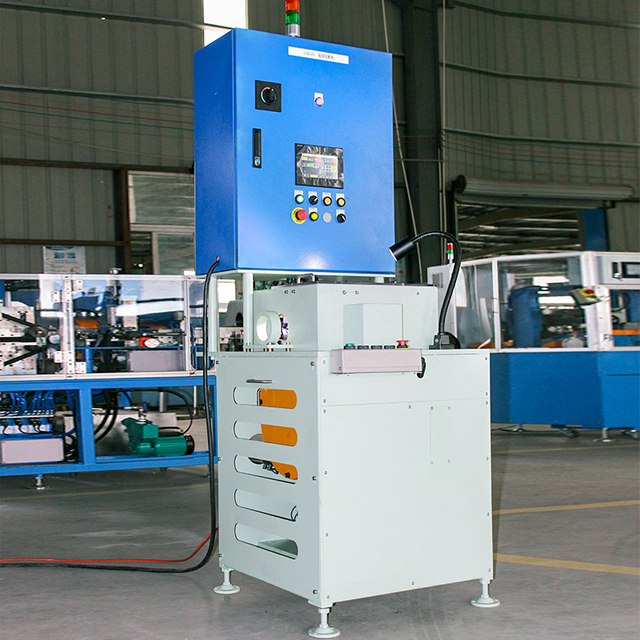
This is where Hydraulic Hose Auxiliary Equipment plays a critical role. An Automatic Hose Cutting Machine ensures clean, square cuts before crimping. An Automatic Hose Skiving Machine removes the outer cover to the correct depth for fitting insertion. A Hose Pressure Testing And Cleaning Machine verifies assembly integrity before the hose goes into service. Together, these machines ensure consistent, reliable assemblies.
Cause 3: Fluid Incompatibility
Not all Hydraulic Hose materials work with all hydraulic fluids. Using a hose with an inner tube incompatible with the system fluid causes the tube to swell, soften, or crack. Swelling restricts flow and generates heat. Cracking leads to internal leakage and eventual cover failure.
Why it happens: Using standard rubber hoses with synthetic fluids or bio-based oils without verifying compatibility.
Prevention strategies:
Check the hose manufacturer's fluid compatibility charts
Select hoses specifically rated for the fluid type used
For specialty fluids, consider PTFE or thermoplastic hoses
Most Hydraulic Hose failures related to incompatibility occur gradually. The inner tube degrades over weeks or months, shedding particles that contaminate the system. By the time external signs appear, the entire system may be compromised.
Cause 4: Exceeding Temperature Limits
Every Hydraulic Hose has a rated temperature range for both the fluid and the ambient environment. Exceeding these limits accelerates aging. High heat hardens the rubber, making it brittle and prone to cracking. Extreme cold stiffens the hose, reducing flexibility and increasing the risk of kinking or bursting under pressure.
Why it happens: Locating hoses too close to engine exhaust, hydraulic pumps, or hot manifolds. Operating machinery in extreme cold without allowing hoses to warm up.
Prevention strategies:
Route hoses away from heat sources
Use heat shields or insulating sleeves
Select high-temperature hoses for hot applications
Allow machinery to warm up gradually in cold weather
In road construction and mining, equipment operates in temperature extremes. Selecting the right Hydraulic Hose for the expected temperature range is essential for reliability.
Cause 5: Exceeding Pressure Ratings
Operating a Hydraulic Hose above its rated working pressure is a direct path to failure. Pressure spikes—sudden increases that exceed the system's normal operating pressure—are particularly dangerous. While the hose may handle brief spikes, repeated over-pressurization weakens the reinforcement layer.
Why it happens: System malfunctions, blocked lines, or operator error.
Prevention strategies:
Install pressure gauges to monitor system pressure
Use hoses with adequate safety margins (working pressure well above normal operating pressure)
Consider spiral-wound hoses for high-impulse applications
Regularly test hose assemblies with a Hose Pressure Testing And Cleaning Machine
A Hose Pressure Testing And Cleaning Machine is not just for initial assembly. Periodic retesting of hoses in critical applications can identify weakened hoses before they fail.
Cause 6: Kinking and Excessive Bending
Every Hydraulic Hose has a minimum bend radius. Exceeding this radius—bending the hose too tightly—causes kinking. A kinked hose restricts flow, generates heat, and damages the reinforcement layer. Even after straightening, the damaged area remains weakened.
Why it happens: Poor routing, inadequate hose length, or forcing hoses into tight spaces.
Prevention strategies:
Always respect the manufacturer's minimum bend radius
Use longer hoses to allow gentle bends
Install bend restrictors or elbows at tight turns
Route hoses to avoid sharp corners
The reinforcement structure of the Hydraulic Hose determines its flexibility. Braided hoses typically bend more tightly than spiral-wound hoses. Understanding the bend radius of each hose type helps in routing decisions.
Cause 7: Twisting During Installation
Twisting a Hydraulic Hose during installation is a common but preventable error. Twisting introduces stress into the reinforcement layer. Under pressure, the twisted hose tries to untwist, causing fittings to loosen or the hose to fail prematurely.
Why it happens: Improper handling during installation, not marking alignment before tightening.
Prevention strategies:
Mark the hose before tightening to detect twist
Use swivel fittings where possible
Tighten fittings while holding the hose straight
Never use a wrench on the hose body to resist fitting rotation
Cause 8: Contamination and Fluid Degradation
Contaminated hydraulic fluid damages Hydraulic Hose inner tubes from the inside. Dirt, water, or chemical contaminants cause the tube to deteriorate, leading to particles entering the fluid stream. These particles accelerate wear on pumps, valves, and cylinders.
Why it happens: Poor fluid maintenance, contaminated fluid during filling, or moisture ingress through damaged breathers.
Prevention strategies:
Maintain proper fluid filtration
Test fluid regularly for contamination
Keep fluid storage containers clean and sealed
Use a Hose Pressure Testing And Cleaning Machine to flush new assemblies before installation
A Hose Pressure Testing And Cleaning Machine serves two critical functions: pressure verification and internal cleaning. Flushing new hose assemblies removes manufacturing debris, cutting dust, and other contaminants that could damage the system.
Cause 9: Ozone and UV Exposure
Outdoor equipment exposes Hydraulic Hose to sunlight and atmospheric ozone. Over time, UV radiation degrades the outer cover, causing cracking and hardening. Ozone attack appears as fine surface cracks, especially in areas under tension.
Why it happens: Continuous outdoor storage, lack of protective covers.
Prevention strategies:
Select hoses with UV-resistant covers
Use hose sleeves or covers for long-term outdoor exposure
Store spare hoses indoors or under cover
Cause 10: Using the Wrong Hose Construction for the Application
Different applications demand different Hydraulic Hose constructions. Using a braided hose where a spiral-wound hose is required is a recipe for early failure. The equipment used to manufacture these hoses reflects their intended applications.
Why it happens: Cost cutting or lack of understanding of application requirements.
Prevention strategies:
Consult hose manufacturer specifications
Match hose construction to pressure, impulse, and temperature demands
A Hose Wire Braiding Machine produces hoses with excellent flexibility for medium-pressure applications. A Hose Wire Spiral Winding Machine produces hoses for ultra-high-pressure, high-impulse environments. A Hose Textile Braiding Machine handles textile reinforcement for lower-pressure applications. A Hose Wrapping And Unwrapping Machine is used in the production of certain hose types, particularly for wrapping protective layers.
Understanding the production process helps in selecting the right hose. Hoses made on a Hose Wire Braiding Machine are ideal for agricultural and general industrial equipment. Hoses made on a Hose Wire Spiral Winding Machine are required for mining, heavy construction, and high-impulse applications.
The table below summarizes the primary causes of Hydraulic Hose failure and their prevention strategies:
| Failure Cause | Primary Prevention | Related Equipment |
| Abrasion | Proper routing, abrasion-resistant cover | - |
| Improper crimping | Calibrated crimping, trained operators | Automatic Hose Cutting Machine, Automatic Hose Skiving Machine |
| Fluid incompatibility | Verify compatibility charts | - |
| Temperature extremes | Heat shields, proper hose selection | - |
| Over-pressure | Pressure monitoring, safety margin | Hose Pressure Testing And Cleaning Machine |
| Kinking | Respect bend radius | - |
| Twisting | Mark alignment, use swivel fittings | - |
| Contamination | Fluid filtration, flush assemblies | Hose Pressure Testing And Cleaning Machine |
| UV/Ozone exposure | UV-resistant covers, indoor storage | - |
| Wrong construction | Match hose type to application | Hose Wire Braiding Machine, Hose Wire Spiral Winding Machine |
The Role of Auxiliary Equipment in Preventing Failures
Many field failures trace back to the assembly process. Poor cutting, inaccurate skiving, and untested assemblies are root causes of premature Hydraulic Hose failure. This is why Hydraulic Hose Auxiliary Equipment is essential for any hose assembly operation.
An Automatic Hose Cutting Machine produces clean, square cuts. A ragged or angled cut makes proper fitting insertion difficult, leading to leaks or blow-offs. The precision of an Automatic Hose Cutting Machine ensures that every hose is cut to exact length with perpendicular ends.
An Automatic Hose Skiving Machine removes the outer cover to the precise depth required for the fitting. Over-skiving damages the reinforcement. Under-skiving prevents the fitting from seating properly. Automation ensures consistency.
A Hose Pressure Testing And Cleaning Machine validates the completed assembly. It pressure-tests the hose to verify it can withstand operating pressures without leakage. It also flushes the hose interior, removing contaminants introduced during cutting and assembly.
For manufacturers producing hoses, Display Of Processed Finished Hose is the final quality checkpoint. Visually inspecting finished hoses for cover damage, fitting alignment, and proper labeling catches defects before they reach the customer.
Assembly Rubber Hose Auxiliary Equipment for Consistent Quality
Assembly Rubber Hose Auxiliary Equipment encompasses the full range of tools needed for reliable hose assembly. This includes cutting machines, skiving machines, crimping machines, and testing equipment. Investing in quality auxiliary equipment reduces the risk of field failures caused by assembly errors.
When a Hydraulic Hose fails due to poor assembly, the cost goes far beyond the hose itself. There is machine downtime, service call expenses, and potential damage to other components. Consistent assembly practices, supported by proper equipment, prevent these failures.
Field Inspection and Preventive Maintenance
Regular inspection of Hydraulic Hose assemblies in the field catches problems before they cause failures. Operators and maintenance personnel should look for:
Cover abrasion or cuts exposing reinforcement
Bulges or blisters indicating internal separation
Cracking or hardening of the cover (ozone or heat damage)
Leaks at fittings or along the hose
Kinks or flattening from improper routing
Fitting corrosion or damage
Any hose showing these signs should be replaced immediately. Waiting for a failure always costs more than proactive replacement.
FAQs
Q: What is the single most common cause of Hydraulic Hose failure in the field?
A: Abrasion is the most common cause. Hoses rubbing against machine frames, other hoses, or rough terrain wear through the outer cover, exposing the reinforcement. Once the reinforcement is damaged, the hose will fail under pressure. Proper routing and abrasion-resistant covers are the best prevention.
Q: How does a Hose Pressure Testing And Cleaning Machine prevent field failures?
A: A Hose Pressure Testing And Cleaning Machine performs two critical functions. First, it pressure-tests the assembled hose to verify it can withstand operating pressures without leakage or failure. Second, it flushes the hose interior to remove contaminants introduced during cutting and assembly. Catching a weak crimp or contaminated hose before it goes into service prevents field failures.
Q: What is the difference between hoses made on a Hose Wire Braiding Machine and a Hose Wire Spiral Winding Machine?
A: Hoses made on a Hose Wire Braiding Machine have interwoven wire layers that provide excellent flexibility for medium-pressure applications. Hoses made on a Hose Wire Spiral Winding Machine have stacked wire layers wound in alternating directions, offering ultra-high pressure capacity and superior impulse resistance for demanding applications like mining and heavy construction.
Conclusion
Understanding the top causes of Hydraulic Hose failure—abrasion, improper assembly, fluid incompatibility, temperature extremes, over-pressure, kinking, twisting, contamination, UV exposure, and wrong construction—enables equipment owners to take preventive action. Consistent assembly practices using Hydraulic Hose Auxiliary Equipment such as Automatic Hose Cutting Machine, Automatic Hose Skiving Machine, and Hose Pressure Testing And Cleaning Machine significantly reduce failure rates.
Nanjing Hydraulic Sun Technology Co., Ltd. offers a complete range of Hydraulic Hose Auxiliary Equipment, including Automatic Hose Cutting Machine, Automatic Hose Skiving Machine, Hose Pressure Testing And Cleaning Machine, and Assembly Rubber Hose Auxiliary Equipment. Contact technical team to learn how proper assembly equipment can reduce field failures and improve your hydraulic system reliability.